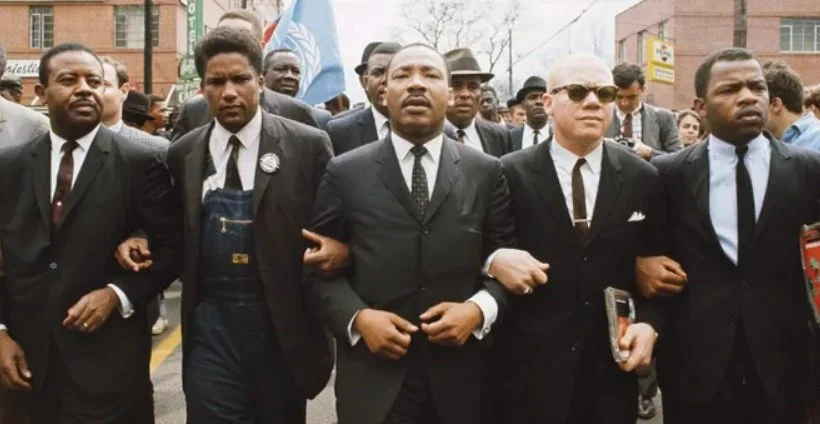
Bringing The American Civil Rights Movement to Life
-
![Collage of images showing people boarding a tour bus, a group on a pedal bar bike, a gourmet burger with fries and onion rings, and a Westin hotel building at dusk.]()
WHAT'S INCLUDED
Our tours are inclusive of nearly everything our travelers will need to make their trip enjoyable, hassle-free, and memorable. We include:
☑ Hotel accommodation based on double occupancy
☑ All meals as listed in the program, including soft drinks/iced-tea/coffee/juice
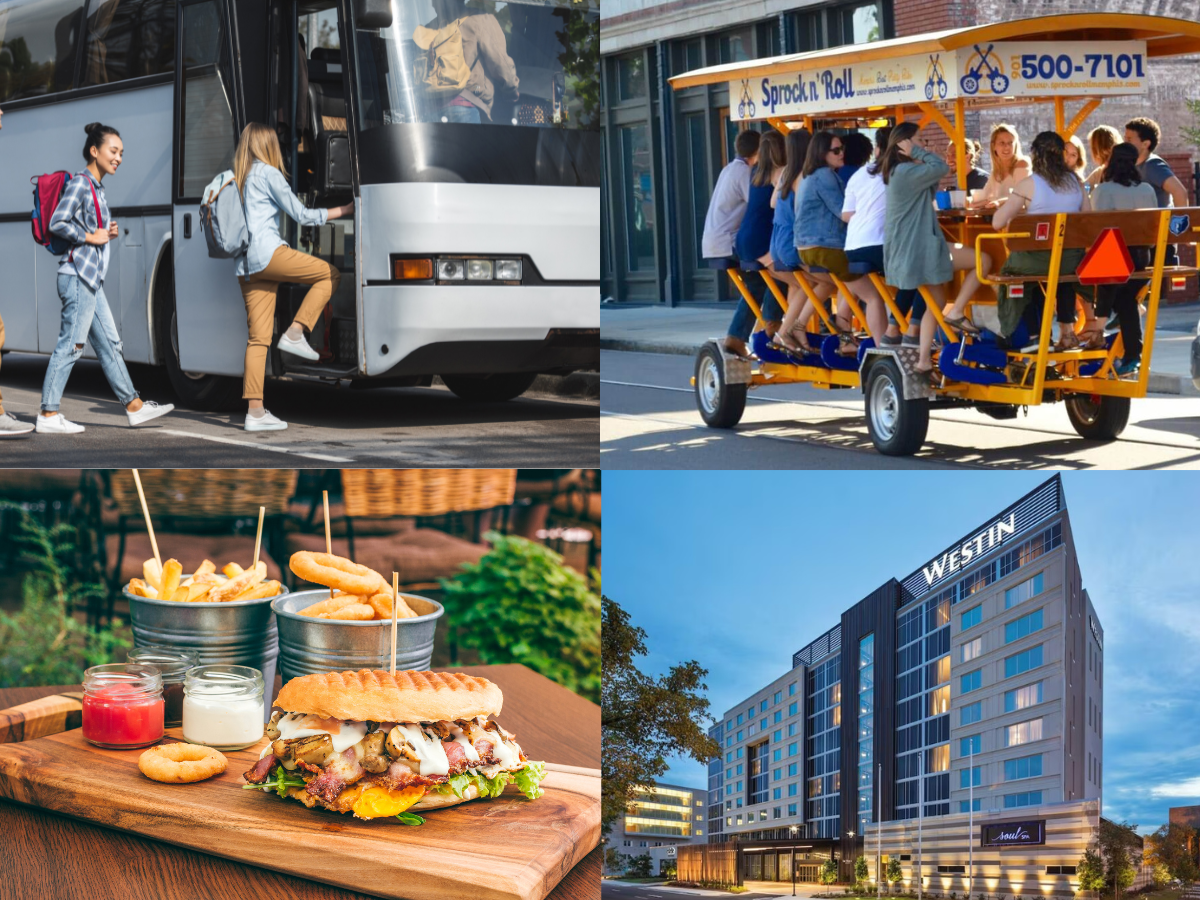
☑ Transportation in a private motor-coach
☑ All entrance fees to venues we visit
☑ All applicable excursion and activity fees
☑ Exclusive speakers every day
☑ A professional tour manager 24/7
☑ A subject matter expert throughout the journey
☑ Additional local tour guides as referenced in itinerary
☑ Ground transportation from the arrival airport to hotel at start of the tour
☑ Ground transportation from hotel to departure airport at end of the tour
☑ Water and snacks on the bus (travelers encouraged to also bring personal water bottles)
☑ All hotel, restaurant, guide, and transportation gratuities
☑ At least two online group sessions prior to departure with guest speakers
☑ Recommended optional educational and reading materials prior to the tour
☑ An optional free one-hour individual post-tour mentoring session (online) with an Adventure Scholar leader
-
![Collage of civil rights history images: Medgar and Myrlie Evers Home National Monument with a sign in front, historic Greyhound bus station in Jackson, Mississippi, and a vintage photo of a young Freedom Rider with "Pushing Forward" text.]()
Day 1: JACKSON, MS
Our journey begins at the Mississippi Civil Rights Museum, where powerful exhibits chronicle the fight for equality, from the horrors of slavery and Jim Crow to the courageous individuals who challenged injustice. We'll delve into the stories of Freedom Riders and hear firsthand accounts from civil rights veterans, reflecting on the ongoing pursuit of justice.
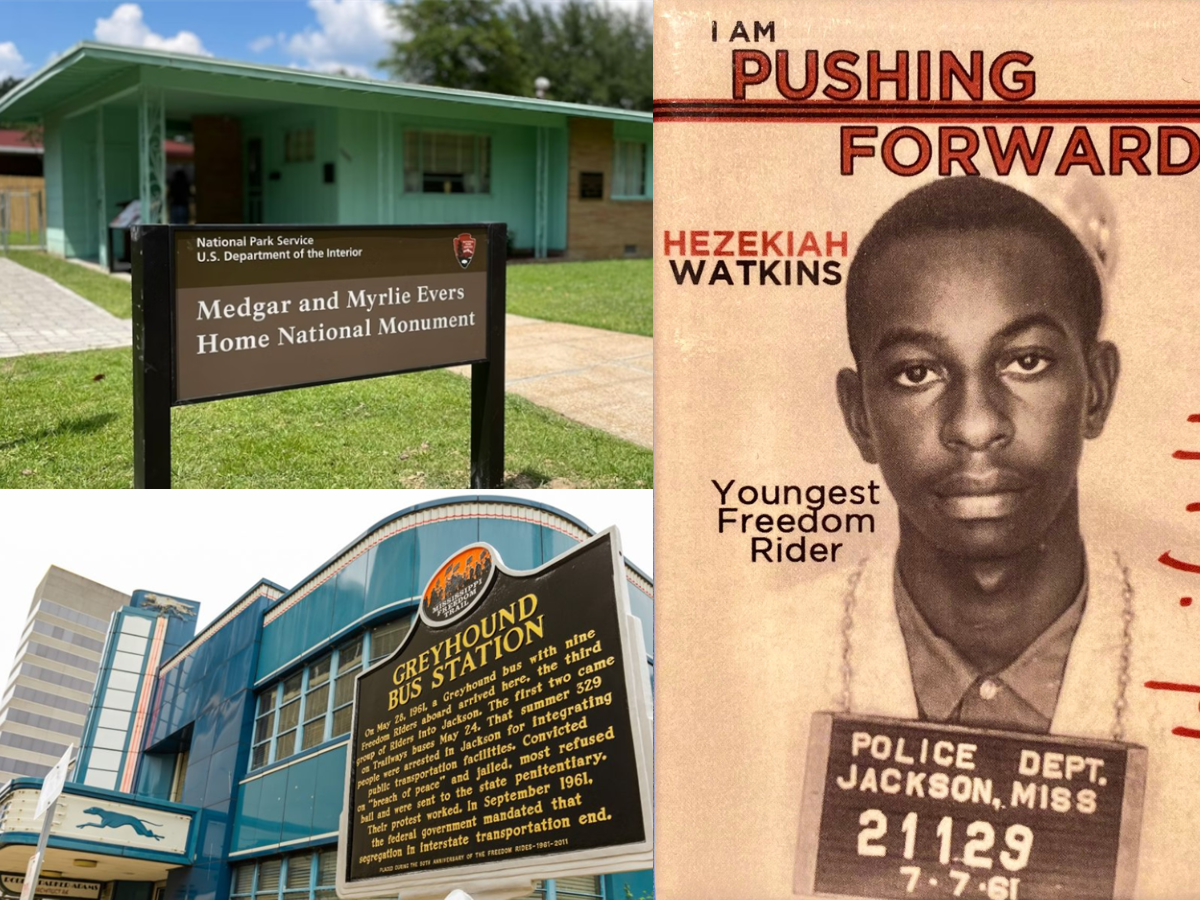
Next, we'll travel to the Medgar & Myrlie Evers Home National Monument, a poignant reminder of the sacrifices made during the movement. Here, at the site where Medgar Evers, NAACP's first Field Secretary in Mississippi, was tragically assassinated, we'll gain intimate insights into his life and legacy during our guided tour.
Our exploration continues at Jackson State University, a vital center of Black education and activism. We'll meet with Dr. Robert Luckett, Director of the Margaret Walker Center and Assoc. Prof. of History. We'll also connect with JSU students, gaining their perspectives on the university's present and future.
Leaving JSU, we'll be joined by Hezekiah Watkins, the youngest Freedom Rider, as we then visit the historic Greyhound Bus Station. Hear his incredible story of courage and resilience as he recounts his experience of being arrested and placed on death row at just 13 years old, and how this pivotal moment shaped his lifelong dedication to activism.
From the Greyhound Station, we'll walk through the historic Farish Street, once known as "Little Harlem," a thriving hub of Black commerce and culture before desegregation. We'll witness ongoing restoration efforts, including the iconic Alamo Theater, which hosted legendary musicians like Nat "King" Cole and Cab Calloway.
Our day ends at the Big Apple Inn, a local institution above which, Medgar Evers had an office. We'll meet Geno Lee, the 4th-generation owner, as we enjoy his great-grandfather's famous pig ear sandwich while hearing stories about Farish Street's vibrant past.
-
![Collage featuring: 1) a small building labeled 'Baptist Town Reception and Learning Center,' 2) a bronze statue of Emmitt Till with a hat, 3) a statue of B.B. King, seated with a guitar.]()
Day 2: INDIANOLA & GREENWOOD, MS
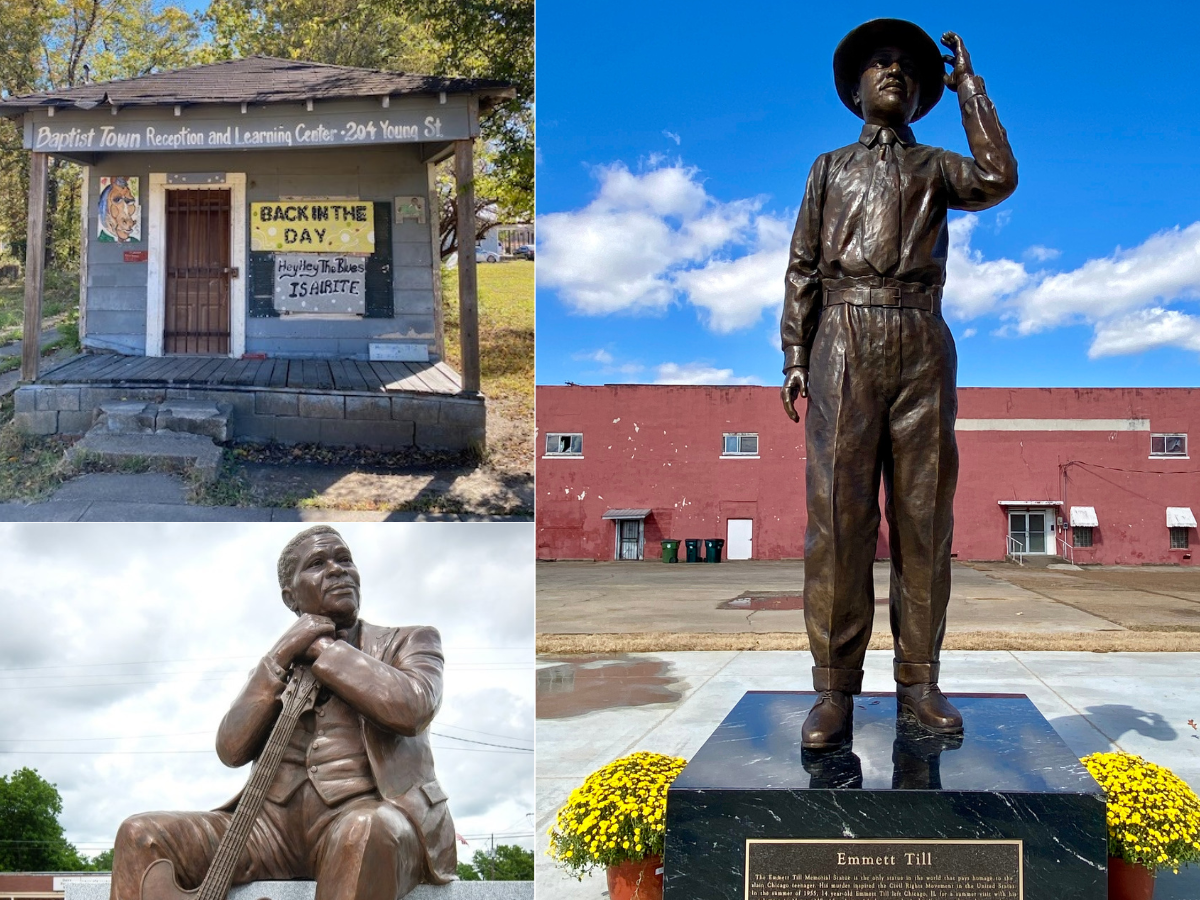
No other genre of music is more American than the Blues! Our first stop of the day begins at the B.B. King Museum & Delta Interpretive Center. From his sharecropper roots to international stardom, we’ll celebrate the life and music of a true Blues icon. Before departing, we'll pay our respects at his final resting place in the museum’s Memorial Courtyard.
Prepare for a culinary highlight: lunch featuring authentic soul food prepared by Greenwood legend Mary Hoover! For 30 years, her restaurant in the historic Baptist Town neighborhood earned international acclaim, even catering for the movie The Help.
After lunch, we'll journey with Mary's husband, Sylvester Hoover, through Baptist Town, visiting their small grocery store and their Back in the Day Museum, a treasure trove of local artifacts. Then, we'll travel to nearby Money, Mississippi, the site of the infamous Bryant Grocery store, where the tragic story of Emmett Till began. Sylvester will guide us through this pivotal moment in Civil Rights history.
Our journey continues to the neighboring town of Sumner and the Tallahatchie County Courthouse, where the Till murder trial took place. We'll sit in the jury box as Benjamin Saulsberry of the Emmett Till Interpretive Center recounts the trial, the shocking acquittal, and the community's path toward reconciliation.
-
![Collage of photos with a black and white photo of white students yelling at a black student, Elizabeth Eckford, during school integration; a photo of a now elderly Eckford speaking to a group; and the exterior of Little Rock Central High School.]()
Day 3: LITTLE ROCK, AR
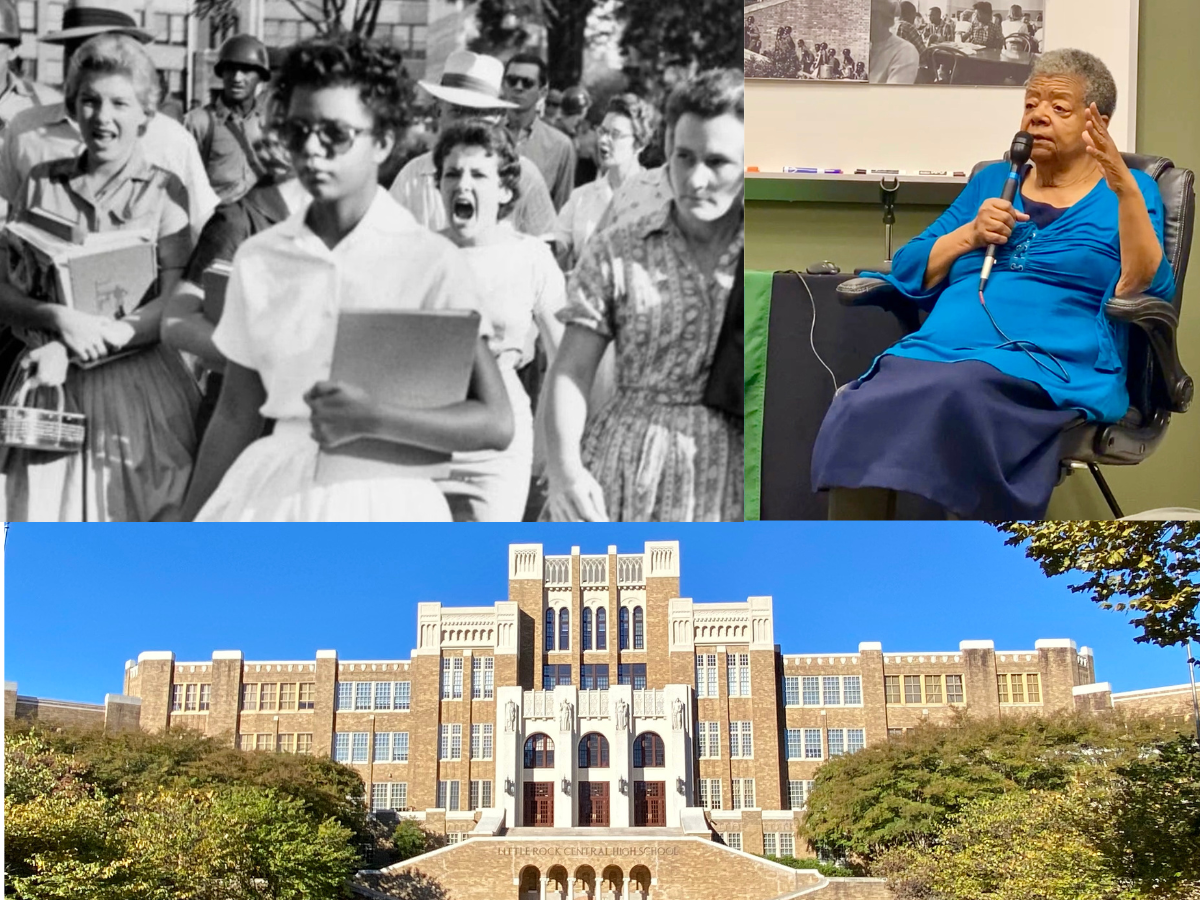
We start the day at the Little Rock Central High School. Here, 15-year-old Elizabeth Eckford, along with eight other Black students, courageously defied an angry white mob on her first day of school in 1957 and would forever be known as one of the “Little Rock Nine.” The iconic photograph of her being verbally assaulted was on the front pages of newspapers nationwide and remains etched in U.S. history as emblematic of the often-violent responses to desegregation efforts in schools across the South.
A true highlight of the trip is our exclusive Adventure Scholars meeting with Ms. Eckford at the Visitor Center nearby. This is a unique opportunity to hear firsthand about her experiences as one of the Little Rock Nine and the challenges she and other Black students faced during the school year.
We have scheduled a private tour of the President William J. Clinton Presidential Center. Dedicated to the 42nd President of the United States and his two terms in office, the Center offers a variety of exhibits, including replicas of the Oval Office and the Cabinet Room, showcasing Clinton's presidency and his impact on American history. In addition to the museum, the Center also houses the Clinton Foundation and the University of Arkansas Clinton School of Public Service, making it a hub for education, policy, and community affairs.
-
![Collage featuring three images: 1) Close up of Tennessee State Rep. Justin Pearson in a suit; 2) Exterior of the Lorraine Motel where MLK, Jr. was killed; 3) Stax Museum of American Soul Music with an illuminated sign at night.]()
Day 5: MEMPHIS, TN
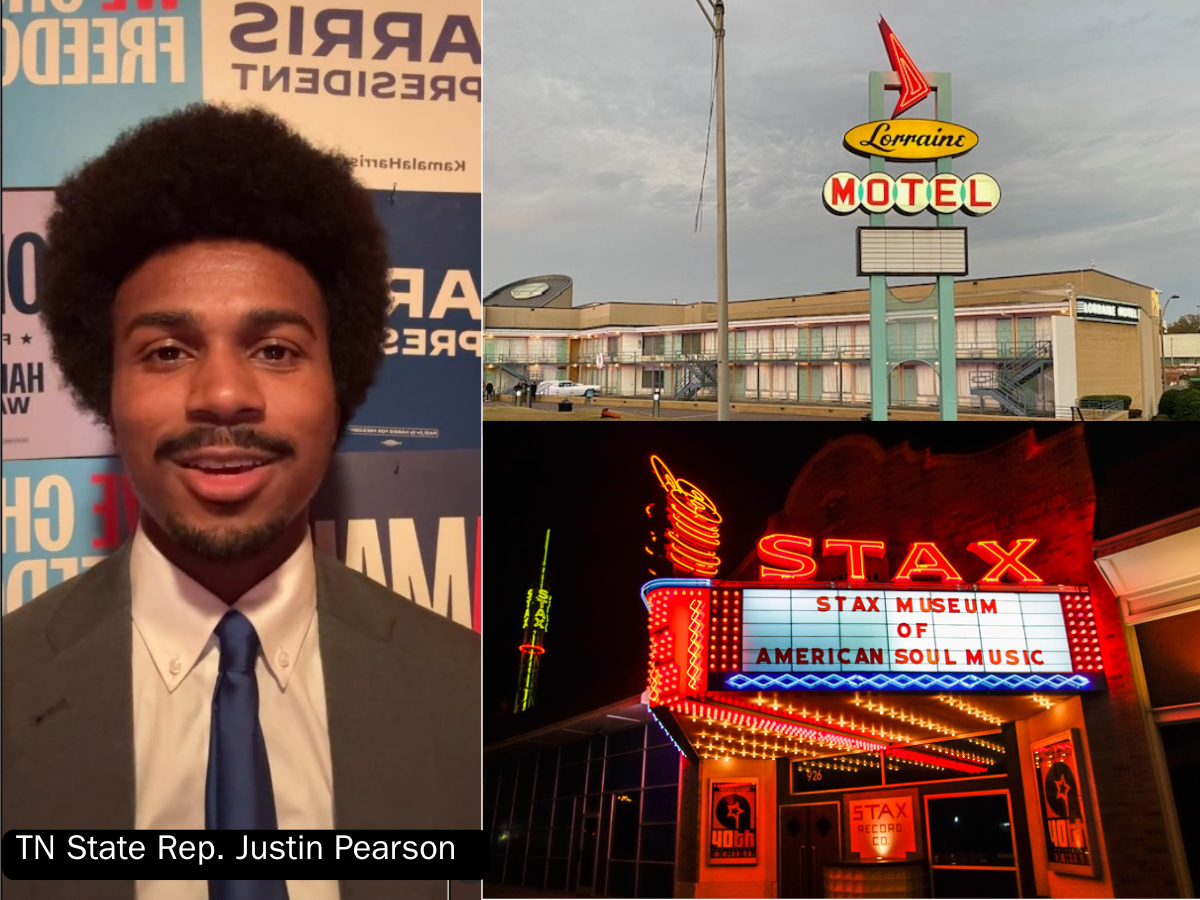
Our day starts with a private tour of the Lorraine Motel, now the National Civil Rights Museum. It was here, on the balcony of Room 306 on April 4, 1968, where Rev. Dr. Martin Luther King, Jr. was assassinated. We’ll visit not only Room 306, but an incredible collection of interactive exhibits and artifacts chronicling the seminal events of the Civil Rights Movement.
Get ready to be inspired by Memphis! We'll start at the Stax Museum of American Soul Music, celebrating the legendary artists who recorded there. Explore interactive exhibits, see iconic stage costumes and instruments, and experience the magic of vintage recording equipment.
A truly special experience awaits: a conversation with TN State Rep. Justin J. Pearson. This young and dynamic representative gained national attention for his activism and leadership. He'll share his insights on community organizing and his fight for legislation addressing economic inequality and social justice.
We’ll delve into Memphis’ vibrant street art scene when we meet local muralist, David Yancy III, who will discuss how artists are taking over buildings across the city to reflect community stories and social commentary. Unleash your inner artist as David takes us through a hands-on street art demonstration!
Get ready to roll! We'll hop on "Sprock n' Roll" group bikes for a 2-hour tour of downtown Memphis! We'll pedal (as our guide steers) down historic Beale Street, hitting Instagram-worthy spots like the A. Schwab Dry Goods Store and Soda Fountain, the oldest original store on Beale Street. Enjoy "Southern Tapas” and music from our curated playlist as we explore the city on wheels!
-
![Collage showing a newspaper headline about a church bombing, a statue depicting civil rights struggle, and Dr. Carolyn McKinstry speaking at 16th St. Baptist Church about the bombing she survived.]()
Day 6: BIRMINGHAM, AL
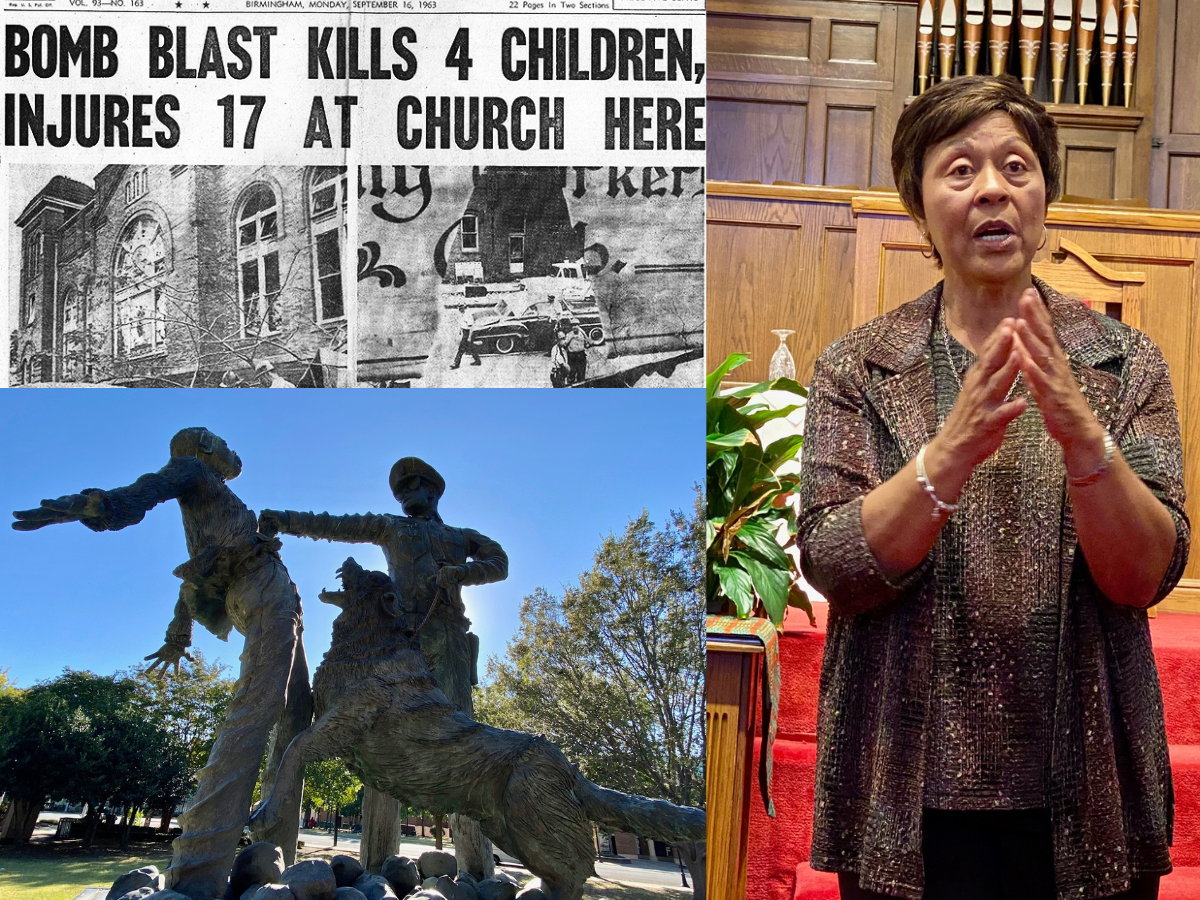
The 16th Street Baptist Church, a site of profound historical significance is our first stop. Here, on September 15, 1963, a horrific bombing by the KKK claimed the lives of four young girls and injured 20 others.
We are deeply honored to be joined by Rev. Dr. Carolyn McKinstry, who, at just 14 years old, was present in the church that day and narrowly escaped the explosion. Birmingham, sadly nicknamed "Bombingham" for the 50 racially motivated bombings between 1945 and 1962, was a focal point of the Civil Rights struggle. Dr. McKinstry will share her firsthand account of that tragic day and its aftermath, as well as her lifelong dedication to civil rights.
Across from the church lies Kelly Ingram Park, where in 1963, the world witnessed the brutal attacks on demonstrators,. Police and firemen used dogs, fire hoses, and batons against men, women, and children, sparking national outrage and accelerating the push for integration in this deeply segregated city. Dr. McKinstry will guide us along the park's "Freedom Walk," discussing the numerous statues and memorials that commemorate pivotal moments in the City’s history.
-
![Collage of historical civil rights images featuring a black and white photo of police beating protesters, the Edmund Pettus Bridge, and a colorful civil rights mural.]()
Day 6 (cont.) SELMA, AL
Our first stop in Selma will be the Brown Chapel African Methodist Episcopal Church.
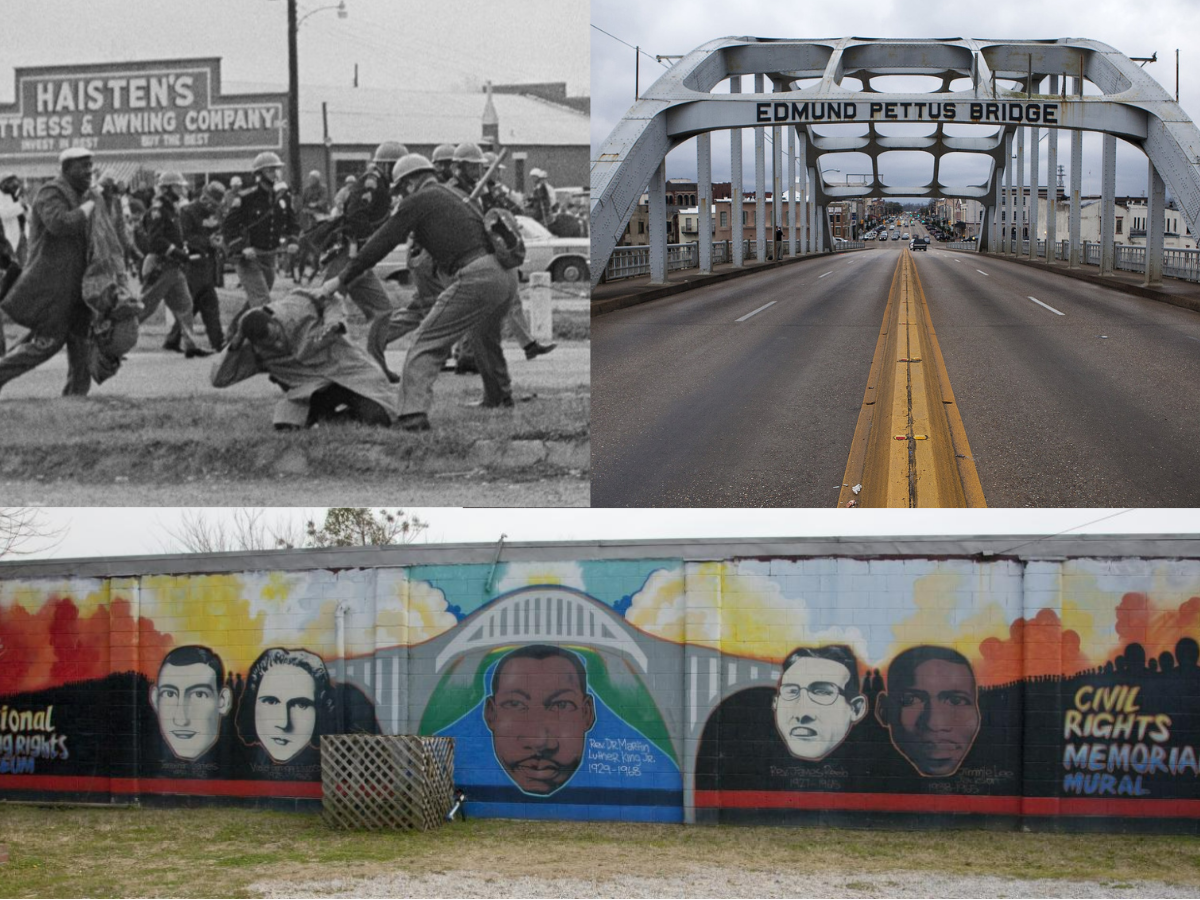
Built in 1908, the Romanesque Revival church served as the starting point for the 54-mile Selma-to-Montgomery march and as a refuge for injured marchers of the “Bloody Sunday” attempted march. Declared a National Historic Landmark in 1997, the church is still used today.
After a short tour of the National Voting Rights Museum & Institute in downtown Selma, we’re very honored to be joined by Miss Annie Pearl Avery. Annie Pearl is a dedicated civil rights activist who participated in numerous protests and campaigns. Born and raised in Birmingham, Alabama, she experienced firsthand the harsh realities of segregation and racial violence. She joined the Student Nonviolent Coordinating Committee (SNCC) and worked on voter registration drives and direct action, such as sit-ins and marches, including “Bloody Sunday.” Her legacy as a fearless advocate for civil rights continues to inspire and motivate future generations.
We will walk across the Edmund Pettus Bridge where, on their third attempt, March 21, 1965, thousands of marchers were finally allowed to make the more than 50-mile trek to Montgomery.
-
![Collage of three images: historic wooden slave cabins, a sculpture of enslaved people in chains, and a group of civil rights leaders marching arm-in-arm with Reverend Dr. Martin Luther King, Jr.]()
Day 7: MONTGOMERY, AL
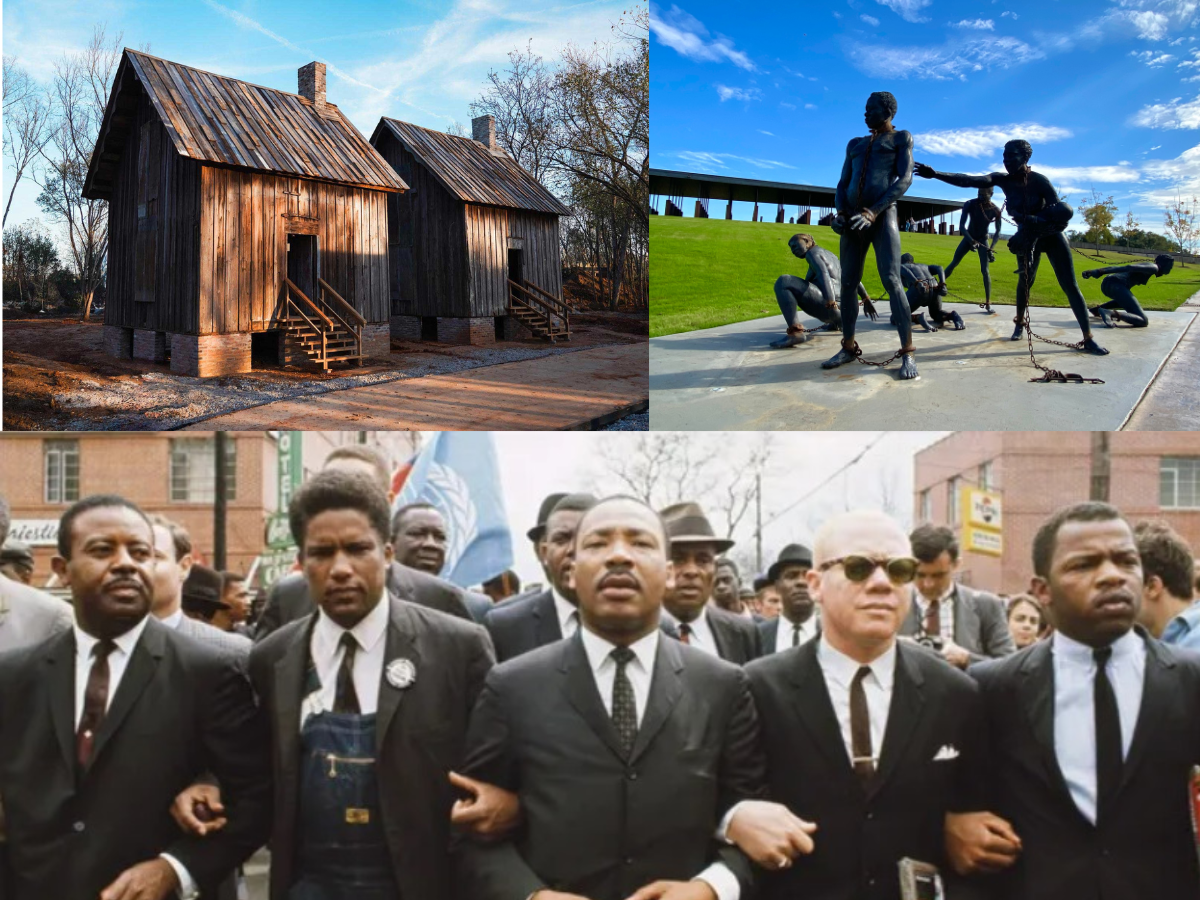
We will experience Montgomery's pivotal role in the Civil Rights Movement, starting in the historic Centennial Hill neighborhood. We'll visit the Dexter Parsonage Museum, the restored home where Dr. Martin Luther King, Jr. and his family lived during his early years as a pastor. We'll see the remnants of the 1956 bombing, a stark reminder of the era's violence, and learn how his time at Dexter shaped his philosophy of non-violent resistance.
Just three houses down the street, we’ll meet Dr. Valda Harris Montgomery, the daughter of Dr. Richard and Vera Harris, whose home served as a meeting place for Montgomery’s civil rights leaders and a safe haven for beaten Freedom Riders. Valda is kind enough to let us tour her family home. We’ll sit in the same kitchen, even on the same chairs, where Dr. King, (future Congressman) John Lewis, Rev. Abernathy, and other legendary leaders met regularly, as Dr. Harris Montgomery shares with us her memories as a teen witnessing the rise of Dr. King and the Civil Rights Movement.
Next, we'll visit the powerful and moving Legacy Museum, built on the site of a former cotton warehouse where enslaved people were forced to work. Through interactive exhibits, first-person narratives, and compelling art, the museum tells the unvarnished story of slavery and its enduring repercussions.
A short ride takes us to the National Memorial for Peace and Justice, the nation's first memorial dedicated to the victims of racial terror lynchings. Here, we'll confront the brutal reality of this history and honor the more than 4,400 Black Americans who were murdered between 1877 and 1950
Our day concludes with a short boat ride to the Freedom Monument Sculpture Park on the Alabama River, one of the newest memorial sites along the Freedom Trail. We'll step inside a replica of a slave train car, see preserved dwellings once inhabited by enslaved people, and admire sculptures crafted from bricks made by enslaved artisans.
*Please note - this is a sample itinerary only. Itineraries are customizable to meet your group’s schedule and goals.
* Some speakers or venues listed in this sample itinerary may not be available, in which case, we have many equally incredible people and places to bring you!